 MarketMoodz
France Sends Naval Assets to Hormuz in Push to Reopen Vital Shipping Lanes
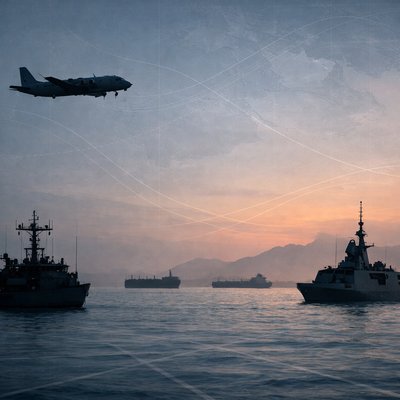
France has reportedly deployed mine-countermeasure ships, two frigates and a maritime patrol aircraft to the Persian Gulf as part of a broader European push to secure navigation through the Strait of Hormuz. The move—announced in social posts and press notes with limited independent verification—aims to reduce disruption risk to a chokepoint that carries roughly one-fifth of global oil and gas flows.
Key Takeaways
- France has deployed minehunters, two frigates and a maritime patrol aircraft to the Persian Gulf to help secure the Strait of Hormuz, according to initial reports.
- The operation accompanies French government posts saying assets are ready to resume safe navigation, though these claims lack independent confirmation.
- Reopening Hormuz could reduce war-risk insurance premiums and stabilize tanker traffic, lowering a key supply shock premium for crude prices.
- Brent traded around the low $70s (reported near $71.94) and WTI near $68.78 after earlier conflict-driven spikes above $114 for Brent at the height of tensions.
- Claims of a coordinated European coalition of 40+ nations and Omani cooperation are reported but remain uncorroborated in available sources.
People Involved
- Emmanuel MacronPresident of France
- Keir StarmerPrime Minister of the United Kingdom
Entities Involved
- French Navy (Marine Nationale)Operator of deployed naval and mine-countermeasure assets
- Charles de Gaulle (aircraft carrier)French aircraft carrier reported to be ending its Gulf deployment
- Sultanate of OmanRegional partner reportedly coordinating to secure territorial waters around Hormuz
- Proposed multinational coalition (40+ nations)Reported European-led effort to support safe transit through the Strait of Hormuz
MarketMoodz Analysis
If confirmed, France’s deployment signals a European willingness to take a more active role in securing energy chokepoints independently of U.S. naval operations. For investors, that matters because a sustained reduction in disruption risk would lower the war-risk premium embedded in tanker insurance and freight rates, easing pressure on Brent and WTI price volatility. Energy equities—particularly integrated oil majors and tanker operators—could see relief in risk-adjusted cash flows and narrower hedging costs if traffic through Hormuz normalizes.
The details remain thin and several claims in initial reports lack independent corroboration, so treat near-term market moves with caution. Historically, spikes in crude tied to Gulf tensions have been sharp but short-lived once shipping lanes reopened or diplomatic de-escalation held; Brent’s run above $114 during peak conflict is a reminder of the upside risk. Watch three indicators: official French/European defense announcements confirming the asset list and mandate, shipping-data feeds (e.g., AIS) showing rising tanker transits through Hormuz, and war-risk insurance price quotes from brokers such as Lloyd’s or Aon for confirmation that risk premia are retreating.
Source: Original Article