 MarketMoodz
Coatue’s Laffont Bets on AI Infrastructure: Semis, Equipment, Nvidia
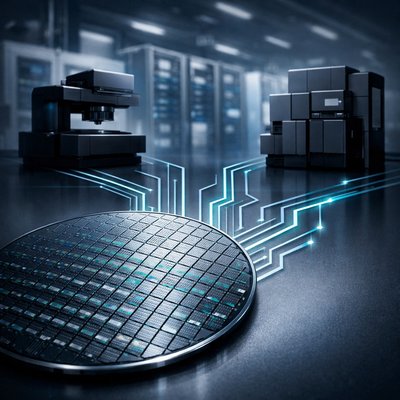
Philippe Laffont, founder of Coatue Management, is shifting his AI wager toward the infrastructure that enables large-scale models. Overseeing roughly $90 billion in assets, he favors a picks‑and‑shovels approach—owning semiconductor manufacturers and fabrication‑equipment suppliers such as TSM, LRCX and AMAT, while keeping exposure to Nvidia.
Key Takeaways
- Coatue, led by Philippe Laffont, manages about $90 billion and is positioning AI exposure toward suppliers and capital equipment.
- Largest disclosed positions include Taiwan Semiconductor (TSM), Lam Research (LRCX) and Applied Materials (AMAT).
- Nvidia (NVDA) remains part of Coatue’s exposure, but Laffont prefers suppliers to avoid a binary bet on one chip architecture.
- Examples such as Amazon’s Trainium and Google’s TPU underscore demand for data‑center hardware beyond GPUs.
- The thesis targets AI-driven data‑center growth via fab capex and equipment orders, shifting risk and returns away from single-chip winners.
People Involved
- Philippe LaffontFounder, Coatue Management
- Julian RobertsonFounder, Tiger Management (hedge fund mentor lineage)
Entities Involved
- Coatue ManagementTech-focused hedge fund managing roughly $90 billion (approx.)
- Nvidia (NVDA)GPU leader and central reference point in the AI hardware market
- Taiwan Semiconductor (TSM)Foundry and semiconductor manufacturer; listed as a top Coatue position
- Lam Research (LRCX)Semiconductor equipment supplier; listed as a top Coatue position
- Applied Materials (AMAT)Capital equipment supplier for fabs; listed as a top Coatue position
- Amazon Web Services (Trainium)AWS-designed AI chip (example of non-GPU data-center demand)
- Google / Alphabet (TPU)Google’s Tensor Processing Unit (example of custom AI hardware driving infrastructure demand)
MarketMoodz Analysis
Laffont’s picks‑and‑shovels stance reframes how investors can access the AI theme. Instead of betting on the single company that produces the definitive AI chip, Coatue is taking exposure to the capital goods and manufacturing backbone that scales AI: foundries, etch and deposition tools, and other equipment. That tilt lowers binary risk—if one chip architecture loses market share, fabs still need capacity and equipment to produce the next generation—and it directs flows toward names like TSM, LRCX and AMAT, which are sensitive to fab capex cycles.
This approach has tradeoffs. Equipment and foundry stocks typically correlate with capex cycles and can be volatile in both directions; they benefit when cloud providers and hyperscalers ramp spending but suffer if AI deployment slows or policy and export controls constrain chip production. Laffont’s admitted history of selling Nvidia too early underscores the timing risk of chasing single winners. For investors, monitor capex guidance and order backlogs from TSM, LRCX and AMAT, plus cloud providers’ data‑center spending and commentary on Trainium/TPU adoption; those indicators will determine whether the supplier-focused trade sustains or reverses.
Treat the reporting as a strategic framework rather than a precise holdings map: the $90 billion AUM figure and position details were reported by CNBC and could not be independently verified here, and asset levels fluctuate. The core lesson remains practical—AI demand is broader than GPUs, and owning the equipment that builds and equips data centers offers a different risk/return profile than concentrated bets on chip champions.
Source: Original Article