 MarketMoodz
Trump: Apple and Intel to Build Chips in U.S., Claim Unverified
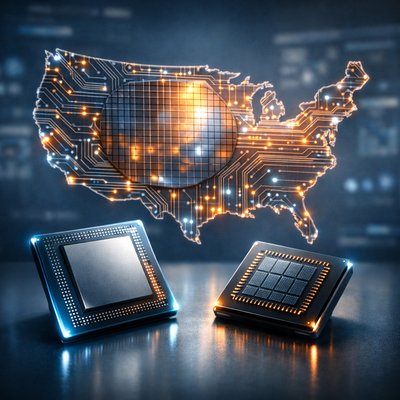
President Donald Trump said Apple has agreed to work with Intel on designing and producing chips in the United States, a move he framed as a win for U.S. manufacturing. The claim comes via Fox Business and lacks independent confirmation from Apple or Intel, leaving key details and timelines unreported.
Key Takeaways
- Trump said Apple and Intel will collaborate on U.S.-based chip design and production, according to a Fox Business report that lacks independent verification.
- Neither Apple nor Intel has publicly confirmed the arrangement, and the report did not disclose production timelines or specific chip products.
- The CHIPS Act and broader U.S. industrial policy are already motivating reshoring and fab investment, which could support any domestic chip plan.
- If executed, the collaboration could diversify Apple’s manufacturing footprint and boost Intel’s demand, but execution, financing and regulatory hurdles create significant uncertainty.
People Involved
- Donald Trump President of the United States
Entities Involved
- Apple Inc. (AAPL) Alleged collaborator on U.S. chip design and production
- Intel Corporation (INTC) Alleged collaborator and potential domestic manufacturing partner
- Taiwan Semiconductor Manufacturing Company (TSMC) Dominant contract chipmaker and benchmark for advanced foundry capacity
- Nvidia Corporation (NVDA) Major chip customer and market context for GPU supply chains
- Advanced Micro Devices (AMD) Major chip designer and competitor relevant to foundry dynamics
MarketMoodz Analysis
For investors, the headline is plausible but incomplete: policy tailwinds from the CHIPS Act and years of federal incentives make U.S.-based chip production more likely today than in the past, and any Apple-Intel collaboration would reshuffle demand dynamics. Intel would stand to gain higher long-term utilization and potential revenue if it can convert design collaboration into foundry-scale production, while Apple would reduce geographic concentration risk by diversifying beyond Taiwan-based foundries like TSMC. That said, markets will want to see legally binding agreements, capex commitments, and timelines before repricing Apple or Intel shares; without those details the claim remains headline risk rather than valuation-moving news.
Historically this would be a notable reversal: Apple relied on Intel for Mac processors from 2006 until its 2020 shift to in-house Apple Silicon manufactured primarily by TSMC. Intel, meanwhile, has spent years trying to rebuild foundry credibility. The CHIPS Act has already prompted large U.S. investments — including announced fabs and incentives — but turning policy momentum into production-grade facilities and qualified chips takes multiple years and hundreds of millions to billions in capital. Watch for confirmations from Apple or Intel, SEC filings, concrete capex plans, and which products would move stateside; those items will determine whether this is a strategic pivot or a political talking point.
Source: Original Article
Get AI-Powered Market Insights
Stay ahead of market-moving events with our real-time analysis and stock ratings.
Start Your Free Trial