 MarketMoodz
Frontline Says Hormuz Reopening Could Rapidly Restore Tanker Traffic
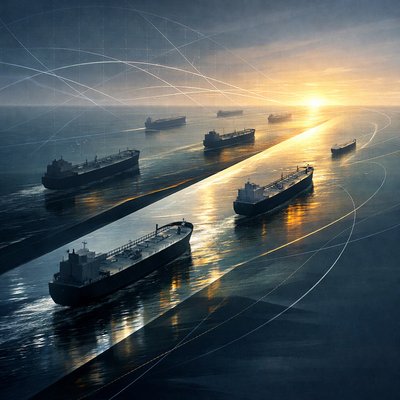
Frontline CEO Lars Barstad told CNBC that traffic through the Strait of Hormuz could climb quickly if the U.S. and Iran reach a credible deal, a shift that would reverberate across shipping and oil markets. Frontline operates about 80 tankers, five of which remain stuck in the Gulf, underscoring how a reopening would rapidly change vessel deployment and freight dynamics.
Key Takeaways
- Lars Barstad expects Hormuz transits to rise quickly if a credible U.S.–Iran deal materializes.
- Frontline (FRO) controls roughly 80 tankers, with five currently stuck in the Gulf.
- Prewar Hormuz traffic was about 130–140 vessels per day versus roughly 5–10 today.
- About 10% of the world’s VLCCs are in the Gulf now, each carrying up to ~2 million barrels.
- Amin Nasser warns tanker repositioning and logistics will be a major constraint on restoring flows.
People Involved
- Lars BarstadCEO, Frontline (FRO)
- Amin NasserCEO, Saudi Aramco
Entities Involved
- Frontline (FRO)Tanker owner/operator with ~80 vessels; five currently stuck in the Gulf
- Saudi AramcoNational oil company; CEO commented on logistical constraints for repositioning tankers
- U.S. NavyProvided escort and assistance for commercial transits through Hormuz
- JMICMaritime threat-assessment body referenced for regional risk levels
MarketMoodz Analysis
If Hormuz starts operating at pre-disruption levels, the immediate market effect will be logistical rather than purely volumetric: crude that’s been forced onto longer southern routes can flow shorter, cheaper routes again, reducing voyage times and altering freight economics. That will remove a near-term structural premium on supply and could ease price pressure on prompt crude grades, but it will also create a surge in demand for tonnage. Higher freight rates will attract VLCCs back to the Middle East, supporting shipping spot rates and owners’ earnings even as global oil balances loosen.
Repositioning tankers takes weeks and costs money. Amin Nasser’s warning about logistics is the operational punchline: many VLCCs are deployed elsewhere or anchored as trading positions, and about 10% of the world’s largest tankers are already in the Gulf, limiting immediate capacity upside. Historical episodes—such as prior Gulf-security flare-ups—show flows can recover fast once transit risk declines, but markets price in both the timing risk and the repositioning lag. For owners like Frontline, a reopening should boost utilisation and spot income; for refiners and oil buyers, the benefit will depend on how quickly the shortest routes reopen and whether storage and sanctioned flows remain constrained.
Watch three things: confirmation of a credible U.S.–Iran accord and any follow-on security assurances, AIS and freight-rate signals (VLCC TC rates such as the TD3 route), and official updates on threat levels or sanctions that could alter routing economics. Traders should also monitor front-month crude spreads and tanker stock performance—shipping equities may rerate faster than physical crude if charter demand spikes before oil balances shift materially.
Source: Original Article