 MarketMoodz
China Builds AI Chips Without Nvidia — What Investors Should Watch
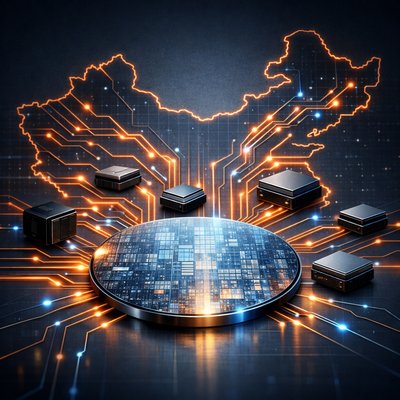
CNBC reports that Chinese automakers and startups are increasingly adopting domestic and multi-supplier AI chips to power driver-assist systems and other AI workloads, cutting reliance on Nvidia’s Orin family. If true, that shift would chip away at Nvidia’s pricing power in China and accelerate competition among Chinese semiconductor suppliers.
Key Takeaways
- CNBC says China is developing alternatives to Nvidia chips for AI and driver-assist systems, reducing single‑vendor dependence.
- Chinese automakers and startups — including reported moves from Nio, Xpeng, BYD and several logistics players — are pursuing multi‑supplier strategies that include Huawei’s T‑head and Horizon Robotics.
- The report claims using China‑made chips can be cheaper than two Nvidia Orin chips per vehicle, a key potential cost lever for wider autonomous‑vehicle deployment.
- Waymo runs just under 4,000 vehicles, while some Chinese players claim larger logistics fleets (Zelostech reportedly cites 25,000 vehicles), underscoring a scale‑and‑data gap in passenger AV deployment.
- Goldman Sachs analysts expect a pivot to domestic chips to accelerate through 2026–2028 as Beijing incentives and supply‑chain policy favor homegrown suppliers.
People Involved
- Jensen HuangNvidia CEO
- Kevin XuFounder, Interconnected Capital
Entities Involved
- Nvidia (NVDA)Provider of Orin driver‑assist and advanced AI chips
- ZelostechReported Robovan/logistics startup claiming multi‑supplier strategy and large fleet (unverified)
- Waymo (Alphabet)U.S. autonomous vehicle operator with ~4,000 vehicles
- NioChinese automaker developing in‑house driver‑assist semiconductors and increasing compute investment
- XpengChinese automaker that co‑developed a vehicle with Volkswagen using Xpeng’s Turing chip
- BYDChinese automaker that revealed its own driver‑assist semiconductor
- HuaweiChinese tech giant with T‑head chip designs touted as Nvidia alternatives
- Alibaba (T‑head)Chip division producing China‑designed processors for AI and edge use
- Horizon RoboticsChinese chip and software vendor collaborating with Volkswagen on driver‑assist in China
- VolkswagenEuropean automaker partnering with Chinese suppliers for driver‑assist in China
- UnitreeRobotics company partnered with Nvidia on 'physical AI' initiatives
- Goldman SachsAnalyst group forecasting accelerated pivot to domestic chips through 2026–2028
MarketMoodz Analysis
If the CNBC account holds, investors should view China’s move as a structural shift that will compress Nvidia’s upside in the mainland market over time. Nvidia still dominates high‑end AI compute and remains largely shielded by the need for advanced accelerators in data‑center training workloads, but driver‑assist and edge AI workloads are more price‑sensitive and easier to substitute. A multi‑supplier ecosystem — led by Huawei, Horizon Robotics, Alibaba’s T‑head and domestic startups — would create pricing pressure for Orin‑class chips and reduce revenue concentration for Nvidia in China, forcing the company to lean harder on other regions and product lines for growth.
History matters: Beijing has pushed self‑sufficiency across telecoms and semiconductors for years, and export controls on cutting‑edge chips have already nudged Chinese firms to accelerate local design and optimization. The consumer‑scale economics of autonomous vehicles—where two Orin chips per vehicle is an oft‑cited cost driver—make edge substitution plausible if local chips hit acceptable accuracy, power and reliability thresholds. The larger question is scale and data: Waymo’s ~4,000‑vehicle fleet remains a benchmark for passenger AV safety validation, while many Chinese claims center on logistics fleets that generate different data types and regulatory outcomes.
What to watch next: confirmatory signals from earnings calls, procurement notices and benchmark tests. Track Nio, Xpeng and BYD for concrete pricing and deployment updates; monitor Huawei, Horizon Robotics and Alibaba for silicon tape‑outs and performance metrics; and watch Chinese regulatory guidance and subsidies that could accelerate domestic adoption. For investors, that means re‑rating exposure: reduce blind optimism about sustained Nvidia pricing in China, and increase due diligence on listed Chinese semiconductor names and suppliers to auto OEMs that could capture share if domestic chips prove cost‑effective and reliable.
Source: Original Article