 MarketMoodz
China’s EV Juggernaut Forces Western Carmakers to Recalibrate
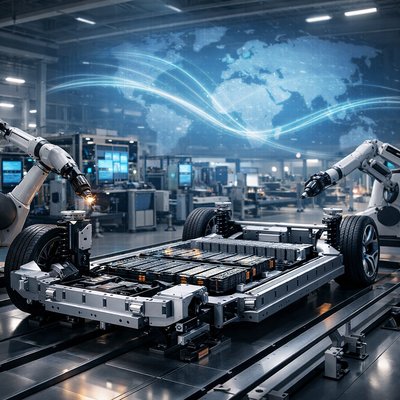
China’s electric-vehicle ecosystem is accelerating past Western rivals, showcasing automation, rapid software development and export muscle at Auto China 2026. Estimates from industry trackers and the IEA point to a meaningful production-cost edge in China, forcing legacy automakers to rethink strategy and capital allocation.
Key Takeaways
- IEA estimates producing a small EV in China can be about 30% cheaper than in advanced economies, largely due to battery and supply-chain advantages.
- Auto China 2026 highlighted high factory automation and faster software cycles from Chinese OEMs and tech entrants such as Xiaomi and Huawei.
- Western brands are losing share in China while shifting away from traditional joint ventures and expanding local R&D or China-designed models abroad.
- Stellantis struck a €1 billion deal with Dongfeng to produce Peugeot and Jeep models for China and export, underscoring new production partnerships.
- Analysts say China’s recent capital flows into EVs and batteries run into the tens of billions, accelerating scale and export capacity—but some headline figures remain unverified.
People Involved
- No specific individuals mentioned
Entities Involved
- XiaomiTech company turned EV maker claiming rapid factory output and software-first approach
- HuaweiTech giant moving into automotive software and EV partnerships
- BYDLeading Chinese EV manufacturer expanding exports
- SAICMajor Chinese automaker expanding overseas
- CheryChinese automaker expanding into Europe and emerging markets
- StellantisEuropean automaker that signed a €1 billion deal with Dongfeng for production and export
- DongfengChinese partner for Stellantis production and export deal
- VolkswagenLegacy automaker reportedly engaging with Chinese software players (allegations about XPeng asset purchase require confirmation)
- XPengChinese EV/software developer linked in reports to deals on software and AD systems
- General Motors (GM)US automaker that has taken writedowns in China and reported a sales decline in Q1 2026
- ToyotaMajor Western automaker expanding R&D or local design presence in China
- FordWestern automaker warning of competitive risks in China and globally
- HondaWestern automaker warning of competitive risks in China and globally
- AudiGerman premium brand cited in reports as offering heavy discounts on some China models
- International Energy Agency (IEA)Energy watchdog cited for production-cost comparisons
- Rhodium GroupResearch group cited for estimates of Chinese investment into EV and battery manufacturing
MarketMoodz Analysis
For investors, the headline is straightforward: China’s vertically integrated EV ecosystem is squeezing margins and market share out of legacy players. A 30% estimated cost advantage on small EVs from the IEA—driven by nearby battery suppliers, automated factories and dense supply chains—translates into pricing power and faster scale for Chinese OEMs and contract manufacturers. That amplifies revenue and margin pressure on Western automakers that still rely on older joint-venture models, outsourced software stacks and higher-cost supply bases.
The strategic response is already visible. Western groups are expanding R&D in China, rethinking joint ventures and striking production partnerships for both local sales and exports—Stellantis’ €1 billion Dongfeng deal is a clear example. Tech entrants (Xiaomi, Huawei) are compressing the hardware-software timeline, turning software development into a competitive moat rather than an afterthought. Investors should treat supplier exposure, software capability and battery-sourcing as primary risk factors when evaluating OEMs and parts suppliers.
Watch-list: quarterly China sales and write-downs from GM and others, concrete deal terms (for example any confirmed VW–XPeng software transactions), export volumes and tariff moves in the EU, and Beijing policy signals on subsidies or industrial support. Caveat: several headline statistics in market chatter remain unverified or are based on estimates; treat single-point figures (export counts, exact market-share shifts) as directional rather than definitive. Portfolio actions: stress-test earnings under wider margin compression, hedge supplier concentration in China, and favor firms that accelerate local software and battery partnerships.
Source: Original Article