 MarketMoodz
Voyager CEO Sees Humans on the Moon by the 2030s; Lunar Infrastructure Boom
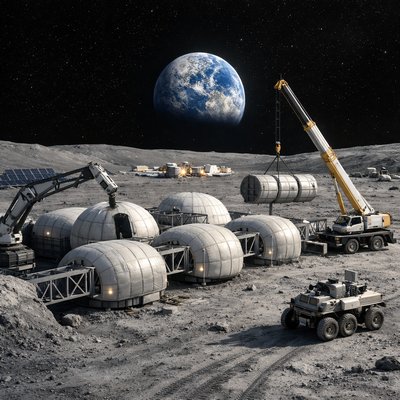
Voyager Technologies CEO Dylan Taylor says humans will live and work on the Moon within the next decade, aided by inflatable bases and life‑support-enabled habitats. He predicts a Moon settlement by 2032–2033 that could even be visible from Earth as people live and work there. The CNBC report frames a rising lunar‑infrastructure boom driven by private players and NASA’s Artemis program.
Key Takeaways
- Taylor forecasts an inflatable, life‑support-enabled Moon base by the end of the 2020s.
- By 2032–2033, humans could be living and working on the Moon—potentially visible from Earth.
- Voyager Technologies aims to replace the ISS with its Starlab project.
- SpaceX and Blue Origin are named as private players shaping the lunar economy.
- Artemis II milestones and a planned 2030 ISS retirement set the funding backdrop for lunar infrastructure.
People Involved
- Dylan TaylorCEO, Voyager Technologies
Entities Involved
- Voyager TechnologiesSpace technology company pursuing lunar infrastructure and Starlab
- SpaceXPrivate spaceflight company expanding lunar capability
- Blue OriginPrivate spaceflight company expanding lunar capability
- NASAU.S. space agency advancing Artemis program
- Deutsche BankFinancial institution noting Moon-economy boom
MarketMoodz Analysis
Dylan Taylor’s lunar-living forecast outlines a potential growth arc in space infrastructure—habitats, orbital data centers, and related supply chains—supported by government funding and private capital. The immediate catalysts are NASA’s Artemis program milestones and rising private participation from SpaceX and Blue Origin, with Deutsche Bank flagging a Moon-economy boom and rising space-sector funding.
Historically, space investment has swung between bold visions and budgeting constraints; the Artemis II milestone and the planned 2030 retirement of the ISS provide anchors that could accelerate commercial lunar ventures, even as Star Lab development remains a closely watched signal.
What to watch next: progress on Artemis II, Starlab’s funding and development, and broader capital flows from both public budgets and private markets, plus regulatory clarity around in-space operations and life-support tech timelines.
Source: Original Article