 MarketMoodz
Alibaba's Qwen AI Arrives in Chinese Cars, Enabling Voice Bookings
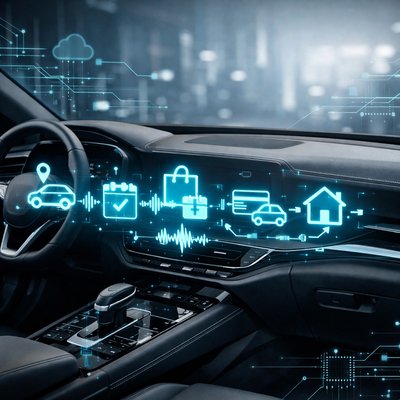
Alibaba's Qwen AI is expanding into in-car systems at the Beijing Auto Show 2026, linking with a broad slate of automakers. The software-first push blends edge processing and cloud AI to support voice-activated bookings, deliveries, and payments, signaling a new differentiator in China's slowing EV market.
Key Takeaways
- Qwen AI expands into in-car systems across BYD, Geely, Li Auto, Changan, Dongfeng, BAIC, Great Wall, SAIC Volkswagen, and SAIC IM Motors (Beijing Auto Show 2026).
- The platform runs on Nvidia automotive chips and is designed to operate offline with a mix of on-device processing and cloud computing.
- Capabilities include voice-initiated food orders, hotel reservations, tickets, package tracking, and payments with multi-step task handling.
- Audi China’s E7X will feature Doubao and iFlyTek AI features, with presales starting May 8, 2026.
People Involved
- No specific individuals mentioned
Entities Involved
- Alibaba Group Tech conglomerate developing Qwen AI for in-car use
- BYD Company Automaker adopting Qwen in vehicles
- Geely Auto Automaker adopting Qwen in vehicles
- Li Auto Automaker adopting Qwen in vehicles
- Changan Automobile Automaker adopting Qwen in vehicles
- Dongfeng Motor Corporation Automaker adopting Qwen in vehicles
- BAIC Group Automaker adopting Qwen in vehicles
- Great Wall Motor Automaker adopting Qwen in vehicles
- SAIC Volkswagen Joint venture adopting Qwen in vehicles
- SAIC IM Motors Automaker adopting Qwen in vehicles
- FAW Hongqi Brand with HS6 PHEV integration of Qwen
- Audi China Automaker linked to Doubao/iFlyTek features
- Cadillac (GM) GM brand demonstrated Doubao-connected voice features (unconfirmed)
- ByteDance Developer of Doubao AI
- iFlyTek AI firm collaborating on Chinese-language AI features
- Nvidia Supplier of automotive chips powering Qwen (edge and cloud)
- Beijing Auto Show Event where Qwen rollout was announced
MarketMoodz Analysis
For investors, this signals a software-first growth vector in a slowing Chinese EV market. The Qwen rollout could lift in-car dwell time and create new revenue streams through hospitality, retail, and ticketing partnerships funded by payments and cross-brand integrations.
Nvidia's chip platform and the offline-capable design are crucial enablers. If OEMs scale integrations quickly, Nvidia’s automotive GPUs and Alibaba’s cloud-enabled AI could become a differentiator comparable to premium in-car assistants, potentially altering competitive dynamics across Chinese carmakers and suppliers.
Watch for: OEM rollout timelines, regulatory clarity on payments and data sharing, and consumer reception as pilots expand. A faster-than-expected adoption could shift sentiment toward software-stacked automakers and AI platform providers within 1-3 years, with broader impact over 3-5 years.
Source: Original Article
Get AI-Powered Market Insights
Stay ahead of market-moving events with our real-time analysis and stock ratings.
Start Your Free Trial