 MarketMoodz
US execs recalibrate China push as trade truce lingers
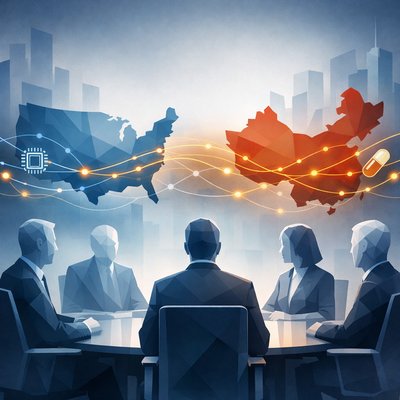
The China Development Forum in Beijing drew more than 80 executives this weekend, signaling sustained foreign interest in China even as U.S.-China tensions persist. The gathering underscored ongoing supply-chain volatility and policy hurdles, even as data show pockets of growth and a meaningful China footprint for Apple and Lilly.
Key Takeaways
- The China Development Forum drew over 80 executives, showing continued foreign interest in China despite tensions.
- Attendees included Tim Cook, David A. Ricks, Li Qiang, Oliver Blume, McDonald’s and Tapestry, among others.
- Executives flagged ongoing supply-chain volatility and policy hurdles even as China shows pockets of growth; Apple derives roughly 18% of its quarterly revenue from China, Lilly’s China revenue share is just under 3%, and Lilly plans a $3 billion China investment over 10 years.
- Beijing’s dual approach—opening for services and healthcare while pushing self-sufficiency under the 15th five-year plan—frames cross-border investment amid a record 2025 trade surplus.
People Involved
- Tim Cook Apple CEO
- David A. Ricks Eli Lilly CEO
- Li Qiang Chinese Premier
- Oliver Blume Volkswagen CEO
Entities Involved
- Apple Inc. (AAPL) Technology company
- Eli Lilly and Company (LLY) Pharmaceuticals
- McDonald's Corp (MCD) Fast-food chain
- Tapestry, Inc. (TPR) Luxury goods and accessories
- Volkswagen AG Automotive
MarketMoodz Analysis
For investors, the forum signals that China remains a meaningful revenue and manufacturing hub even as the U.S.-China truce lingers and policy ambiguity persists. Apple’s China exposure—about 18% of quarterly revenue—alongside Lilly’s modest China contribution and a $3 billion long-term investment plan, points to a mixed risk-reward profile tied to regulatory reimbursement dynamics and tech-manufacturing cycles.
Historically, China has used openings—opening services and healthcare to foreign firms—while pursuing self-sufficiency through the 15th five-year plan. The result is a dual impulse: maintain access for foreign capital where it suits Beijing while tightening control over critical sectors and resources, including rare-earths. The near-term macro backdrop—Beijing’s record 2025 trade surplus and potential policy shifts—means investors should price in policy surprises and supply chain reconfiguration.
What to watch next: Lilly’s progress on its China investment and any changes in regulatory reimbursement; Apple’s evolving China revenue trajectory and supply-chain localization; potential extensions or adjustments to the truce and any changes in export controls for critical inputs; and how Volkswagen and other automakers adapt manufacturing footprints in light of policy and market volatility.
Source: Original Article
Get AI-Powered Market Insights
Stay ahead of market-moving events with our real-time analysis and stock ratings.
Start Your Free Trial