 MarketMoodz
Hormuz Bottleneck Tightens Oil Flow: 21 Tankers Since Feb 28
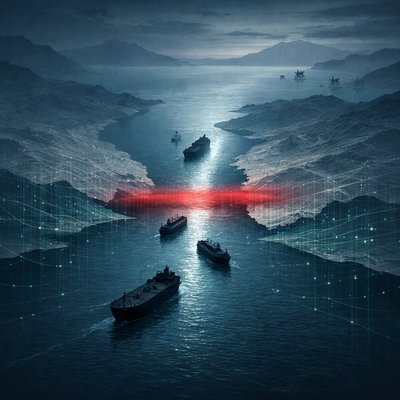
Oil shipping through the Strait of Hormuz has slowed to a trickle as Iran's de facto blockade persists since the Feb 28 start of the conflict. Through Mar 15, only 21 tankers had transited, versus more than 100 ships daily before the disruption. Analysts say crossings are being selectively cleared and many vessels wait outside Hormuz.
Key Takeaways
- 21 tankers transited Hormuz through Mar 15, vs. 100+ ships daily before the conflict
- About 400 vessels were spotted in the Gulf of Oman area amid a large backlog near the chokepoint
- Cosco Shipping suspended all new bookings for Middle East routes earlier in the month
- Pakistan-flag Aframax became the first confirmed non-Iranian cargo vessel to transit Hormuz
- 11 China-linked vessels transited Hormuz Feb 1–15 per Lloyd’s List Intelligence
People Involved
- No specific individuals mentioned
Entities Involved
- Cosco Shipping Shipping company; suspended new bookings for Middle East routes
- Lloyd's List Intelligence Maritime data provider cited by CNBC for transit data
- CNBC News outlet reporting on Hormuz traffic
- Iran State actor enforcing de facto blockade at Hormuz
- Pakistan-flag Aframax First confirmed non-Iranian cargo vessel to transit Hormuz
- Shenlong (Liberia-flag Suezmax) Vessel carrying ~1 million barrels of Saudi crude to Mumbai via Hormuz
- Smyrni (Saudi crude tanker) Vessel that sailed to Mumbai via Hormuz; passage safety unclear
MarketMoodz Analysis
The bottleneck at Hormuz is a direct test for energy markets. With a tiny fraction of pre-conflict traffic, oil-shipping costs and insurance premia are likely to move higher as traders price the risk of disruption into crude and product flows. The data suggest selective clearance rather than a full reopening, which could amplify price volatility in near-term oil benchmarks and widen crack spreads for crude.
Historically, Hormuz has functioned as a coercive lever as much as a choke point. The current pattern mirrors prior episodes where access was conditioned by geopolitical signals, not a broad-based easing of tensions. Investors should monitor changes in Iranian policy, negotiated safe passages, and visible shifts in AIS data and tanker activity — especially any uptick in shipments to China or new bookings from major shippers — to gauge the risk of a renewed supply squeeze.
Source: Original Article
Get AI-Powered Market Insights
Stay ahead of market-moving events with our real-time analysis and stock ratings.
Start Your Free Trial