 MarketMoodz
NVIDIA Unveils Space Compute Chip, Signals Orbital Datacenters
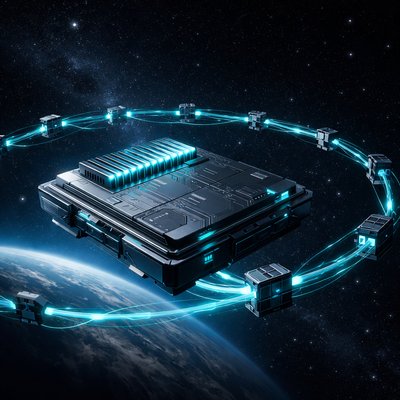
NVIDIA unveiled the Space-1 Vera Rubin Module, a space-based AI compute chip, at the GPU Technology Conference. The company also described plans to build orbital datacenters and use satellites for image processing, signaling a bold push beyond terrestrial data centers—though independent verification of the claims remains pending.
Key Takeaways
- Space-1 Vera Rubin Module allegedly delivers over 25x more AI compute for space-based inferencing, though the methodology isn't disclosed.
- NVIDIA outlined plans to create orbital datacenters and use satellites for real-time image processing.
- Cooling in space would rely on radiation due to the lack of conduction/convection.
- The story ties NVIDIA to Uber, BYD, Geely and SpaceX/Tesla context, but verification for partnerships and programs is uncertain.
People Involved
- Elon MuskSpaceX/Tesla founder
Entities Involved
- NVIDIA Corp.AI hardware/space compute chip maker
- SpaceXSpace transportation company
- Uber Technologies Inc.Ride-hailing company; potential autonomous fleet collaboration
- Lyft Inc.Ride-hailing company; context in broader mobility AI
- BYD Co LtdAuto manufacturer exploring Nvidia-powered AI for self-driving
- Geely Automobile Holdings LtdAuto maker evaluating Nvidia self-driving tech
- Tesla IncEV maker; referenced in Terafab/AI discussions
- THOR chipRadiation-hardened AI processor referenced in space compute context
MarketMoodz Analysis
For investors, NVIDIA's Space-1 Vera Rubin Module and orbital-datacenter ambitions imply a potential extension of AI compute demand into space-enabled networks, which could diversify revenue beyond terrestrial data centers. The claims, if validated, would support new partnerships and capex cycles around space-grade hardware, but verification remains unclear.
Space-based compute faces meaningful technical and regulatory hurdles—radiation hardening, cooling via radiation, latency, and space-sustainability concerns. Historically, space-grade computing has progressed slowly compared to ground-based AI, suggesting a long timeline for commercialization and a watchful eye on official disclosures and partnerships.
What to watch next: official specifications from NVIDIA and any THOR partner disclosures, corroboration of satellite-image processing work, and any announced collaborations with ride-hailing or auto-makers. Timeline realism and regulatory clarity will shape the investment case as this story evolves.
Source: Original Article