 MarketMoodz
Microsoft Wins Approval for 15 Data Centers at Foxconn Site, Mount Pleasant
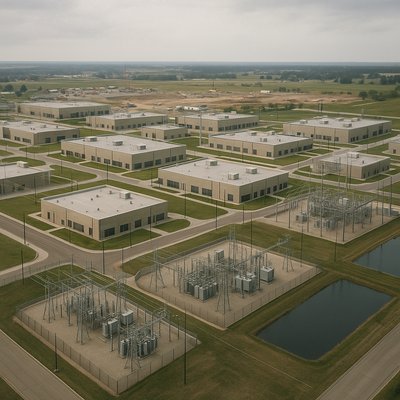
Microsoft won unanimous approval from Mount Pleasant village board to add 15 data centers on two lots near its existing Wisconsin campus. The project will bring nearly 9 million square feet of new building space and three substations, underscoring a broader AI-ready data-center push in the region.
Key Takeaways
- Mount Pleasant village board approved plans for 15 data centers near the existing facility
- Two new lots total about 9 million square feet of building area and include three substations
- Taxable value of the developments exceeds $13 billion
- Construction and jobs could span about 10 years, per village president
- Water use capped at 8.4 million gallons annually from the city of Racine
People Involved
- David DeGrootMount Pleasant village board president
- Samuel SchultzMount Pleasant village board member
Entities Involved
- Microsoft Corp. (MSFT)Technology company expanding data center footprint
- Foxconn (Hon Hai Precision Industry Co.)Former Wisconsin plant site context
- OpenAIClient for AI workloads
- NVIDIA Corp.GPU supplier for AI workloads
MarketMoodz Analysis
This expansion signals Microsoft’s continued AI-cloud capex, expanding compute capacity to support OpenAI and other clients. For investors, the move suggests a rising spend tempo on hyperscale data centers, with potential implications for capex cadence, local utilities, and regional tech employment in Wisconsin.
Historically, the Foxconn-led promise of a $10 billion plant and thousands of jobs in Wisconsin offers a cautionary backdrop: promised economic impact can diverge from realized outcomes, especially under debt strains. The mounting race among hyperscalers—Amazon, Google, Oracle—uses Nvidia GPUs to fuel AI-ready infrastructure, intensifying competition and potentially affecting data-center pricing and supply chains.
Going forward, key watch points include permitting timelines, water and energy availability, tax assessments, and the pace of construction. Investors should monitor how the local utility constraints and regulatory approvals shape the project timeline and capital outlay, as well as any updates on monetization strategies for AI workloads.
Source: Original Article
Get AI-Powered Market Insights
Stay ahead of market-moving events with our real-time analysis and stock ratings.
Start Your Free Trial